LansonReims
Producer profile
TyS 6/10 "exciting new developments are unfolding to usher in a brand-new era at an historic estate that is quite extraordinary." Ninth-largest Champagne house has maintained "remarkable consistency" over the years despite losing all 208 hectares of its vineyards and most of its stock to Moët back in 1991. This resilience is largely credited to its long-tenured chef de cave who stayed with Lanson through the corporate peripeteia. The house style is no malolactic fermentation in vintage and prestige cuvées. Some malo is allowed in the entry-level Black Label Brut and in the Rosé, depending on the harvest. Current chef de cave is from Mailly Grand Cru cooperative and he is focusing on small-parcel vinification, introduction of oak for ageing to obtain a creamy texture and complexity, and adding diversity to the deep reserve stock. "Following primary fermentation, the wine is cooled to 8C and sulphur dioxide preservative is added to block malolactic fermentation. This creates a distinctive house style of excitingly high-strung, age-worthy champagne." Lanson's 57 hectares today are managed with a newly urgent emphasis on sustainable viticulture after a challenging 2017 harvest. Only grand cru fruit is used in Gold Label Vintage and this is "one of the lowest-priced vintage wines on the shelves". The 2008 is "desperately too young" now, "the electric zap of 2008 malic acidity all-conquering", nonetheless "it's an absolute triumph" that should be bought in bulk and cellared until 2030 (!) Read the full review. ToS 88 "lucky for Lanson that its talented and experienced cellar master Jean-Paul Gandon did not abandon the sinking ship after LVMH left them without their vineyards." The brand has suffered from criticism but their champagnes are "better than their reputation." "Lanson excels at vintage Champagnes. They are toasty, evolved and voluptuous wines brightened by their non-malo nature." The prestige Noble Cuvée Rosé is a "lesson in elegance."
TyS 6/10 "exciting new developments are unfolding to usher in a brand-new era at an historic estate that is quite extraordinary." Ninth-largest Champagne house has maintained "remarkable consistency" over the years despite losing all 208 hectares of its vineyards and most of its stock to Moët back in 1991. This resilience is largely credited to its long-tenured chef de cave who stayed with Lanson through the corporate peripeteia. The house style is no malolactic fermentation in vintage and prestige cuvées. Some malo is allowed in the entry-level Black Label Brut and in the Rosé, depending on the harvest. Current chef de cave is from Mailly Grand Cru cooperative and he is focusing on small-parcel vinification, introduction of oak for ageing to obtain a creamy texture and complexity, and adding diversity to the deep reserve stock. "Following primary fermentation, the wine is cooled to 8C and sulphur dioxide preservative is added to block malolactic fermentation. This creates a distinctive house style of excitingly high-strung, age-worthy champagne." Lanson's 57 hectares today are managed with a newly urgent emphasis on sustainable viticulture after a challenging 2017 harvest. Only grand cru fruit is used in Gold Label Vintage and this is "one of the lowest-priced vintage wines on the shelves". The 2008 is "desperately too young" now, "the electric zap of 2008 malic acidity all-conquering", nonetheless "it's an absolute triumph" that should be bought in bulk and cellared until 2030 (!) Read the full review. ToS 88 "lucky for Lanson that its talented and experienced cellar master Jean-Paul Gandon did not abandon the sinking ship after LVMH left them without their vineyards." The brand has suffered from criticism but their champagnes are "better than their reputation." "Lanson excels at vintage Champagnes. They are toasty, evolved and voluptuous wines brightened by their non-malo nature." The prestige Noble Cuvée Rosé is a "lesson in elegance."
Tasting notes
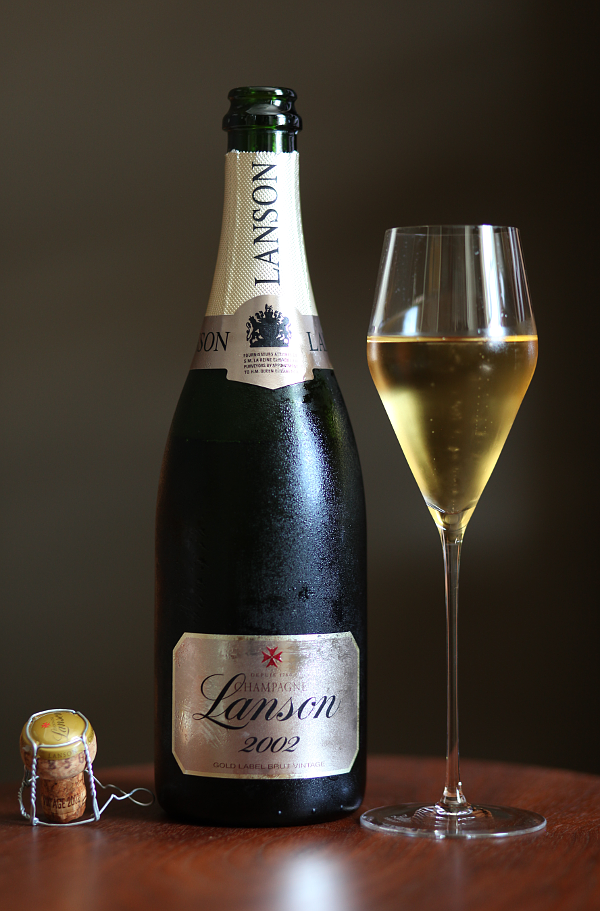 Gold Label Brut Vintage 2002. Disgorged in January 2012. QR code on the back leads to a meaningless marketing blurb. Attractive festive bottle with a rose gold label and a nicely textured neck foil. Placid cork. Well-chosen color of the plaque de muselet echoes the rich yellow of the wine. Vigorous mousse. This is quite dry with immense post-disgorgement character. Notes of popcorn and roasted sunflower seeds. Purchased at Molly's Spirits in summer 2020 for $99. ⭐⭐
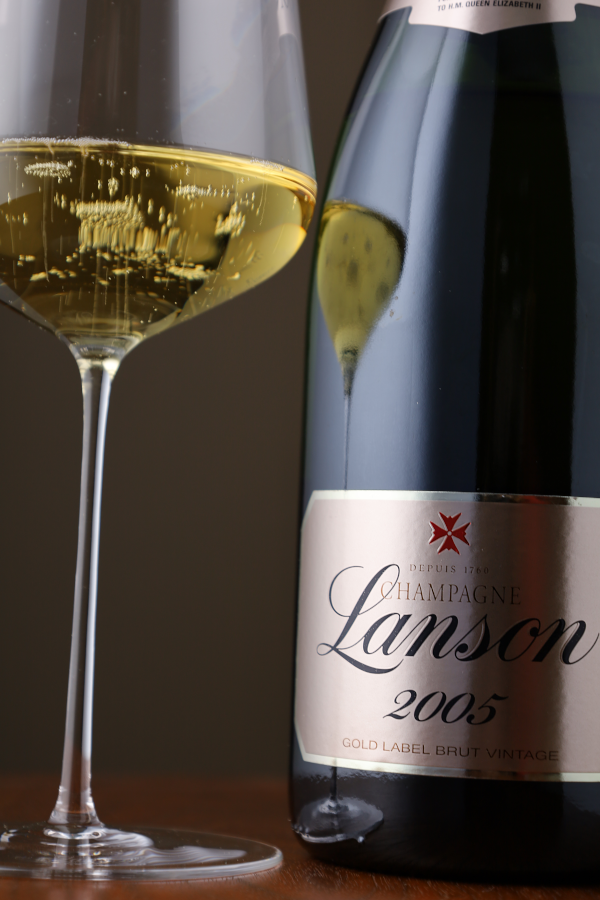 Gold Label Brut Vintage 2005. Disgorged in December 2014. Chalky and flinty nose with good age. Sterling acidity, it's almost too dry and downright unsmiling when colder. A touch of sherry in the finish at first but it disappears quickly. Good effervescence, slightly prickly. This is remarkably fresh-tasting for its age and I would appreciate a little more patination like in the 2006 Péters. Purchased at Hazel's in autumn 2020 for $70. ⭐
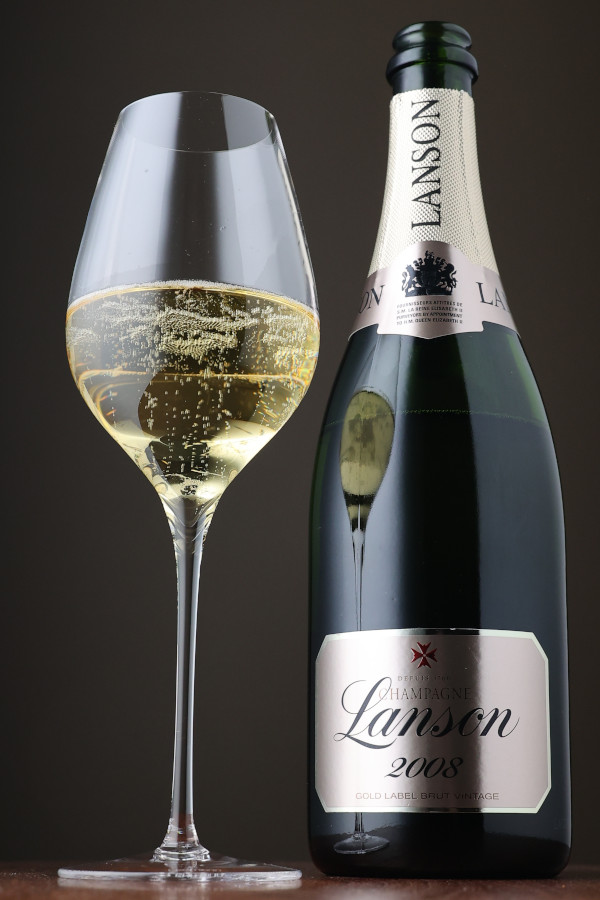 Gold Label Brut Vintage 2008. Disgorged on February 22 2016. Uncorked with a short sharp pop. Clean scent from the mouth of the bottle with some acidity already coming through. Greenish hue. Very tasty, dry, fairly bitter and crunchy, but there is offsetting juiciness and maturity so the overall formula works very well. More balanced from Lehman glass compared to Zalto Bordeaux. There's a very faint gunpowdery afterburn in the finish. This is what I would call a "racy" wine. I wonder how it would taste next to another lean and mean machine like Tarlant's Brut Zero. Vinous and broadly, comfortably bitter on day two, dry but not ungenerous. TyS raves about this wine, see my notes above. Purchased at Applejack for $100 in autumn 2020. ⭐⭐
All photos and tasting notes are by @gaiwanstyle
Producer profiles and wine details are from books by Peter Liem (PL), Tyson Stelzer (TyS), and Tom Stevenson (ToS)
Producer profiles and wine details are from books by Peter Liem (PL), Tyson Stelzer (TyS), and Tom Stevenson (ToS)