Pierre MoncuitMesnil-sur-Oger, Côte des Blancs
Producer profile
PL "Nicole Moncuit has been in charge of viticulture and vinification at this well-known Le Mesnil-sur-Oger estate since 1977, making champagnes that feel pure, precise, and distinctive." the estate owns vineyards in Le Mesnil and in the Côte de Sézanne but the two terroirs are never blended. The Sézanne chardonnay goes to Cuvée Hugues de Coulmet while Delos is pure Le Mesnil. Pierre Moncuit is one of the growers who own vines in Le Mesnil's renowned Les Chétillons vineyard and makes an "elegant and sophisticated Cuvée Nicole Moncuit Vieille Vigne from chardonnay vines that are nearly 100 years old." "A wine of great finesse and depth, it shows the concentration of old vines, as well as the complexity imparted by this magnificent terroir." TyS no mention. ToS 88 Nicole Moncuit oversees the winemaking while her brother Yves takes care of the commercial side of the business. The domain has 20 hectares largely in Le Mesnil-sur-Oger but also in Sézanne, which is used entirely for their Hugues de Coulmet cuvée. "These are extremely pure and linear Champagnes that gain their style by being vinified in stainless steel. All cuvées, even non-vintage, are made from the fruit of one vintage only. As rare mono-crus from Le Mesnil-sur-Oger, they are tight, reserved and highly mineral. The Moncuit vintage Champagne is excellent, gaining a welcome mellowing effect from nearly ten years on the lees. The single-vineyard Cuvée Nicole Moncuit, from the old Le Mesnil vines, is a step up in refinement and intensity." Their website features pretty watercolor illustrations and is worth exploring.
PL "Nicole Moncuit has been in charge of viticulture and vinification at this well-known Le Mesnil-sur-Oger estate since 1977, making champagnes that feel pure, precise, and distinctive." the estate owns vineyards in Le Mesnil and in the Côte de Sézanne but the two terroirs are never blended. The Sézanne chardonnay goes to Cuvée Hugues de Coulmet while Delos is pure Le Mesnil. Pierre Moncuit is one of the growers who own vines in Le Mesnil's renowned Les Chétillons vineyard and makes an "elegant and sophisticated Cuvée Nicole Moncuit Vieille Vigne from chardonnay vines that are nearly 100 years old." "A wine of great finesse and depth, it shows the concentration of old vines, as well as the complexity imparted by this magnificent terroir." TyS no mention. ToS 88 Nicole Moncuit oversees the winemaking while her brother Yves takes care of the commercial side of the business. The domain has 20 hectares largely in Le Mesnil-sur-Oger but also in Sézanne, which is used entirely for their Hugues de Coulmet cuvée. "These are extremely pure and linear Champagnes that gain their style by being vinified in stainless steel. All cuvées, even non-vintage, are made from the fruit of one vintage only. As rare mono-crus from Le Mesnil-sur-Oger, they are tight, reserved and highly mineral. The Moncuit vintage Champagne is excellent, gaining a welcome mellowing effect from nearly ten years on the lees. The single-vineyard Cuvée Nicole Moncuit, from the old Le Mesnil vines, is a step up in refinement and intensity." Their website features pretty watercolor illustrations and is worth exploring.
Tasting notes
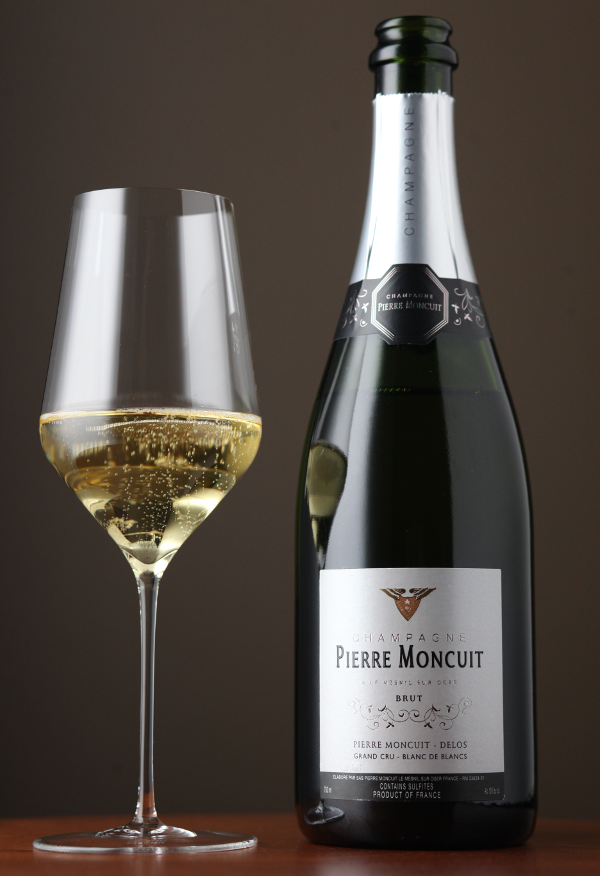 Cuvée Pierre Moncuit-Delos. This nonvintage blanc de blancs is made entirely from a single year's harvest. Which year is unclear because there are no indications on the bottle. Pretty label with a winged coat of arms motif. Fully composite cork. Creamy appetizing leesy smell with overtones of rye bread and salt. Instantly enjoyable and not too prickly. Moderate acidity and lighter in body and finish, at first almost to a fault. Oxidative but not unpleasant, tasting of sherry and pecans, growing ever more appetizing with time in the glass. Turning quite toasty and very-very tasty. Fabulous and endless in the glass, never getting too warm or too flat, even on day two. Good value. Purchased at Peak Beverage in autumn 2020 for $54. ⭐⭐
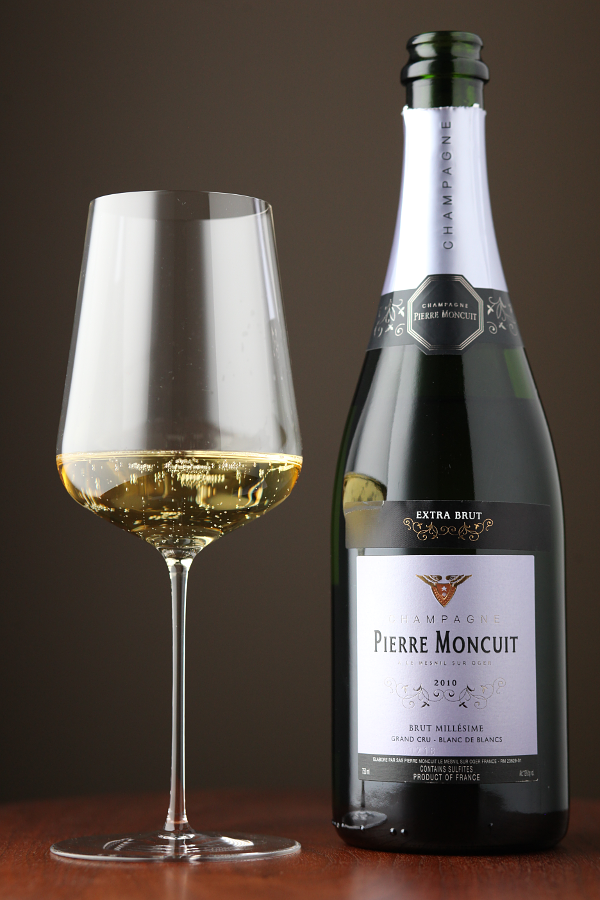 Millésime 2010. No disgorgement indication. Composite cork. Good dosage, tasty and pleasantly bitter. There is a faint sherry nuance that's starting to get slightly tiresome. And although it disappears quickly, it is still detectable the following day. The scent is humid and green like a meadow after rain, in cold weather. I'm wanting a little more ripeness the next day but curiously the wine regains its harmonious balance with food. Pleasant chalk and overall very tasty. Purchased at Peak Beverage in autumn 2020 for $84. ⭐⭐
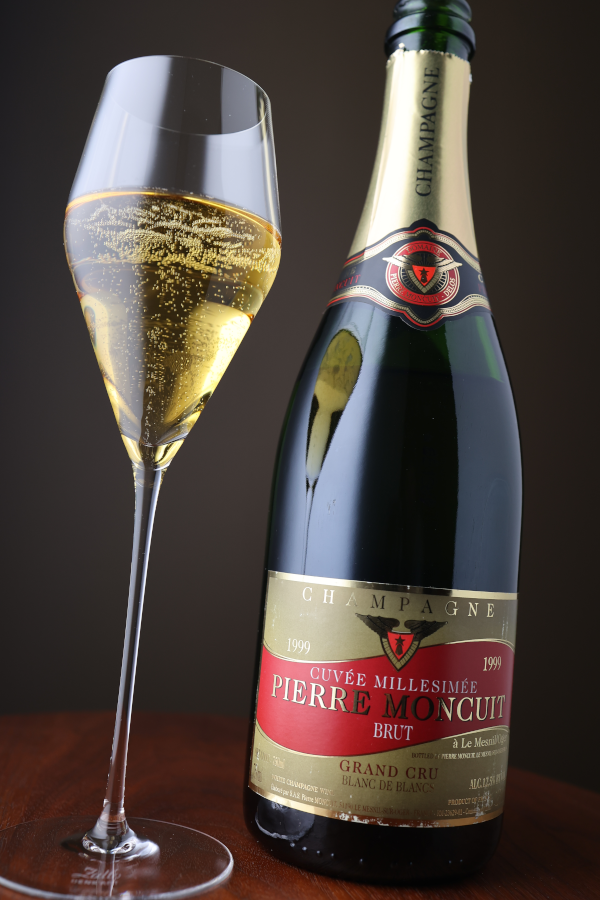 Millésime 1999. Uncorked with a sigh. Good cork, hurray! Exuberantly effervescent. Gold-leaf color. Cellar and sherry notes upfront. Good acidity with a shade of bitterness like in blackcurrant or gooseberry seeds but not tannic. Smells like raw stretchy sourdough, then like rye crumb. In the beginning it tastes better from Zalto Champagne than Burgundy glass: more focused, more balanced, and sweeter. Associative curiosities follow, such as a whiff of a still occupied seashell and then onion. The acidity (or minerality?) carries into the scent and there morphs into a kind of steeliness. Purchased at Catherine's in autumn 2020 for $75 (!) ⭐⭐⭐
All photos and tasting notes are by @gaiwanstyle
Producer profiles and wine details are from books by Peter Liem (PL), Tyson Stelzer (TyS), and Tom Stevenson (ToS)
Producer profiles and wine details are from books by Peter Liem (PL), Tyson Stelzer (TyS), and Tom Stevenson (ToS)