Louis RoedererReims
Producer profile
24 mentions by PL! The house was founded in 1776 and acquired its current name in 1833. "Today it's the greatest house in Champagne, and a model twenty-first-century champagne producer. In fact, it's virtually not a house at all but rather a large domaine: it's almost a mistake to think of Louis Roederer as a négociant, since there's only one wine - the NV Brut Premier - that includes purchased grapes. All the house's vintage champagnes, including Cristal, come exclusively from Roederer's own vineyards, allowing for maximum control over viticultural quality and practice." "Roederer's vintage champagnes are closely aligned to terroir and can be divided into clay-driven and chalky ones." Virtually all of Roederer's vins clairs come from 410 individual parcels, whereas most champagne houses blend the fermented wines from a given village. Roederer "fastidiously isolates individual vineyards" in order to create a more complex and diverse array of wines. "Tasting through Roederer's vins clairs shows that fine wine is, first and foremost, an expression of the place where it's grown." The finished blends typically contain "hundreds of base wines." All of the wines, except the NV Brut Premier is made without malolactic: "It's not a question of acidity, it's about purity of fruit. Without the malolactic, there's a greater clarity and precision of flavor that is very important for us," says Roederer's chef de cave Jean-Baptiste Lécaillon. The house is "renowned for keeping its reserves in large oak foudres, which contributes to the nonvintage Brut Premier's signature creamy texture and toffeelike complexity." Vintage Blanc de Blancs is made in a lower-pressure style. "What I've found is that in more delicate vintages, the wine benefits a lot from long lees aging and a late disgorgement," says Lécaillon. "But in ripe years, the earlier disgorgements can often show better." Roederer is "the largest biodynamic vineyard holder in Champagne" with 100 hectares farmed biodynamically out of total 240 and "most of the rest are organic, planted with cover crops and regularly plowed", including 30 hectares by horse. "We began thinking about the future of Champagne in 1996. It couldn't be about technique. It had to be about the place. That is what led us to biodynamics." The change in approach was validated in trials, PL says: "I have tasted the vins clairs with Lécaillon each year since [the experiment began] and the biodynamic wines have consistently stood out, even when tasted blind. The biodynamic parcels also have been better able to handle adverse conditions such as mildew, botrytis, and water stress, and they produce wines of higher acidity at equivalent levels of sugar." "Roederer, though, isn't a typical biodynamic producer. The house's brand of biodynamics is rationalist, empirical, and unorthodox, and most of its biodynamic vineyards, while farmed rigorously according to biodynamic principles, are not certified as such. Rather, Lécaillon describes his approach as 'haute couture,' individually tailoring his team's vineyard work to each plant and sparing no detail or effort to achieve the highest possible quality." "Specific parcels are designated for each cuvée and farmed accordingly, meaning that there are essentially seven different domaines, corresponding to the house's seven champagnes." Verzenay and Verzy is where the "stronghold" of Roederer's holdings lies. The clay parcels of pinot noir go into Vintage Brut. Vintage Rosé is made from clay-rich parcels in Cumières. Both also receive a small proportion of Côte des Blancs chardonnay. Cumières parcels of pinot noir, chardonnay, and meunier are pressed and fermented together to create the "unusually supple and complete" Brut Nature. The chalky Avize chardonnay is for the vintage Blanc de Blancs. Cristal is "a step up in intensity", "a prestige cuvée like no other." Cristal "requires at least ten to twenty years of age to reveal its full complexity and finesse. It's famously long lived", albeit released and largely consumed still relatively young. The "finest rosé in Champagne", Cristal Rosé is "the most striking example of an Aÿ-based blend", "aristocratic and terroir-expressive", it "always reflects the demeanor and complex, concentrated flavors of Roederer's Aÿ pinot noir." See page 146 for a detailed and enthusiastic writeup about this cuvée. It too "needs at least a couple of decades to show its best." Roederer also cultivates its own sélection massale and maintains its own vine nursery, which is "virtually unheard of in Champagne." TyS 9/10. Roederer is "the largest independent, family-owned and managed champagne maker." Chef de cave since 1999, Lécaillon says: "Chalk is the style of Roederer. It produces more focused wines, while clay produces more round and soft styles." "We have a new era in Champagne today, coming back to the terroir; forgetting about all know-how in the cellar, forgetting about the salt and the pepper, but getting back to the raw ingredients." Lécaillon "has customized the pruning, budding, trellising, ploughing and harvesting of each vineyard to suit the cuvée to which it is destined." 50 hectares in Côte des Blancs are devoted to Cristal. 134 hectares are certified organic, which amounts to 1/5 of total organic vineyards in Champagne. "Unusually, the solids are retained during pressing, producing a cloudy juice. 'We feel this expresses terroir better and gives greater protection against oxidation'." Wild yeasts have been recently introduced for fermentation. "Long, slow ferments of two to three weeks, compared with the usual seven days" create "texture and silkiness." Lécaillon notes that "Malolactic fermentation was first conducted in Champagne in 1965. It can be useful in a difficult year, but it must be a safety tool, not a systematic procedure." But "the only way to avoid malo is to produce fruit in the vineyard that doesn't require it - ripe fruit with soft malic acid." "Malolactic and oak are not the house style. Terroir is the house style, and malolactic and oak are just there according to what the grapes need." Cristal Rosé 2008 was made with 16% malo, for example. About 20% of vintage wines are fermented in oak: "Oak phenolics and the right fruit phenolics draw out salinity on the sides of the tongue and bring out another dimension to the flavour." Typical dosage is 7-9g. Lécaillon "tweaks the pressure to suit every cuvée, bottling riper vintages at five atmospheres, sometimes as low as four, and more classic, lean seasons at six. 'Lower pressure creates finer bubbles, creamier texture and greater integration'." 100 points for Cristal Rosé 2008 and extolling reviews for all other cuvées. ToS 97 "value". Deutz is part of the same ownership group. It was Roederer who bought Leclerc-Briant's 10 biodynamic hectares when they went up for sale. Cristal was created for the last Russian Tsar and it was very sweet at the time. Today Cristal has become "nothing less than a license to print money (particularly in the USA)." Roederer champagne's mousses are "the most stunning, so fine and creamy." Brut Premier is "bright, succulent, creamy, biscuity" and "more than reasonably priced". Even so, "the vintages offer the best value" and "the finest of them is the Blanc de Blancs," while Cristal is "one of the finest wines on earth."
24 mentions by PL! The house was founded in 1776 and acquired its current name in 1833. "Today it's the greatest house in Champagne, and a model twenty-first-century champagne producer. In fact, it's virtually not a house at all but rather a large domaine: it's almost a mistake to think of Louis Roederer as a négociant, since there's only one wine - the NV Brut Premier - that includes purchased grapes. All the house's vintage champagnes, including Cristal, come exclusively from Roederer's own vineyards, allowing for maximum control over viticultural quality and practice." "Roederer's vintage champagnes are closely aligned to terroir and can be divided into clay-driven and chalky ones." Virtually all of Roederer's vins clairs come from 410 individual parcels, whereas most champagne houses blend the fermented wines from a given village. Roederer "fastidiously isolates individual vineyards" in order to create a more complex and diverse array of wines. "Tasting through Roederer's vins clairs shows that fine wine is, first and foremost, an expression of the place where it's grown." The finished blends typically contain "hundreds of base wines." All of the wines, except the NV Brut Premier is made without malolactic: "It's not a question of acidity, it's about purity of fruit. Without the malolactic, there's a greater clarity and precision of flavor that is very important for us," says Roederer's chef de cave Jean-Baptiste Lécaillon. The house is "renowned for keeping its reserves in large oak foudres, which contributes to the nonvintage Brut Premier's signature creamy texture and toffeelike complexity." Vintage Blanc de Blancs is made in a lower-pressure style. "What I've found is that in more delicate vintages, the wine benefits a lot from long lees aging and a late disgorgement," says Lécaillon. "But in ripe years, the earlier disgorgements can often show better." Roederer is "the largest biodynamic vineyard holder in Champagne" with 100 hectares farmed biodynamically out of total 240 and "most of the rest are organic, planted with cover crops and regularly plowed", including 30 hectares by horse. "We began thinking about the future of Champagne in 1996. It couldn't be about technique. It had to be about the place. That is what led us to biodynamics." The change in approach was validated in trials, PL says: "I have tasted the vins clairs with Lécaillon each year since [the experiment began] and the biodynamic wines have consistently stood out, even when tasted blind. The biodynamic parcels also have been better able to handle adverse conditions such as mildew, botrytis, and water stress, and they produce wines of higher acidity at equivalent levels of sugar." "Roederer, though, isn't a typical biodynamic producer. The house's brand of biodynamics is rationalist, empirical, and unorthodox, and most of its biodynamic vineyards, while farmed rigorously according to biodynamic principles, are not certified as such. Rather, Lécaillon describes his approach as 'haute couture,' individually tailoring his team's vineyard work to each plant and sparing no detail or effort to achieve the highest possible quality." "Specific parcels are designated for each cuvée and farmed accordingly, meaning that there are essentially seven different domaines, corresponding to the house's seven champagnes." Verzenay and Verzy is where the "stronghold" of Roederer's holdings lies. The clay parcels of pinot noir go into Vintage Brut. Vintage Rosé is made from clay-rich parcels in Cumières. Both also receive a small proportion of Côte des Blancs chardonnay. Cumières parcels of pinot noir, chardonnay, and meunier are pressed and fermented together to create the "unusually supple and complete" Brut Nature. The chalky Avize chardonnay is for the vintage Blanc de Blancs. Cristal is "a step up in intensity", "a prestige cuvée like no other." Cristal "requires at least ten to twenty years of age to reveal its full complexity and finesse. It's famously long lived", albeit released and largely consumed still relatively young. The "finest rosé in Champagne", Cristal Rosé is "the most striking example of an Aÿ-based blend", "aristocratic and terroir-expressive", it "always reflects the demeanor and complex, concentrated flavors of Roederer's Aÿ pinot noir." See page 146 for a detailed and enthusiastic writeup about this cuvée. It too "needs at least a couple of decades to show its best." Roederer also cultivates its own sélection massale and maintains its own vine nursery, which is "virtually unheard of in Champagne." TyS 9/10. Roederer is "the largest independent, family-owned and managed champagne maker." Chef de cave since 1999, Lécaillon says: "Chalk is the style of Roederer. It produces more focused wines, while clay produces more round and soft styles." "We have a new era in Champagne today, coming back to the terroir; forgetting about all know-how in the cellar, forgetting about the salt and the pepper, but getting back to the raw ingredients." Lécaillon "has customized the pruning, budding, trellising, ploughing and harvesting of each vineyard to suit the cuvée to which it is destined." 50 hectares in Côte des Blancs are devoted to Cristal. 134 hectares are certified organic, which amounts to 1/5 of total organic vineyards in Champagne. "Unusually, the solids are retained during pressing, producing a cloudy juice. 'We feel this expresses terroir better and gives greater protection against oxidation'." Wild yeasts have been recently introduced for fermentation. "Long, slow ferments of two to three weeks, compared with the usual seven days" create "texture and silkiness." Lécaillon notes that "Malolactic fermentation was first conducted in Champagne in 1965. It can be useful in a difficult year, but it must be a safety tool, not a systematic procedure." But "the only way to avoid malo is to produce fruit in the vineyard that doesn't require it - ripe fruit with soft malic acid." "Malolactic and oak are not the house style. Terroir is the house style, and malolactic and oak are just there according to what the grapes need." Cristal Rosé 2008 was made with 16% malo, for example. About 20% of vintage wines are fermented in oak: "Oak phenolics and the right fruit phenolics draw out salinity on the sides of the tongue and bring out another dimension to the flavour." Typical dosage is 7-9g. Lécaillon "tweaks the pressure to suit every cuvée, bottling riper vintages at five atmospheres, sometimes as low as four, and more classic, lean seasons at six. 'Lower pressure creates finer bubbles, creamier texture and greater integration'." 100 points for Cristal Rosé 2008 and extolling reviews for all other cuvées. ToS 97 "value". Deutz is part of the same ownership group. It was Roederer who bought Leclerc-Briant's 10 biodynamic hectares when they went up for sale. Cristal was created for the last Russian Tsar and it was very sweet at the time. Today Cristal has become "nothing less than a license to print money (particularly in the USA)." Roederer champagne's mousses are "the most stunning, so fine and creamy." Brut Premier is "bright, succulent, creamy, biscuity" and "more than reasonably priced". Even so, "the vintages offer the best value" and "the finest of them is the Blanc de Blancs," while Cristal is "one of the finest wines on earth."
Tasting notes
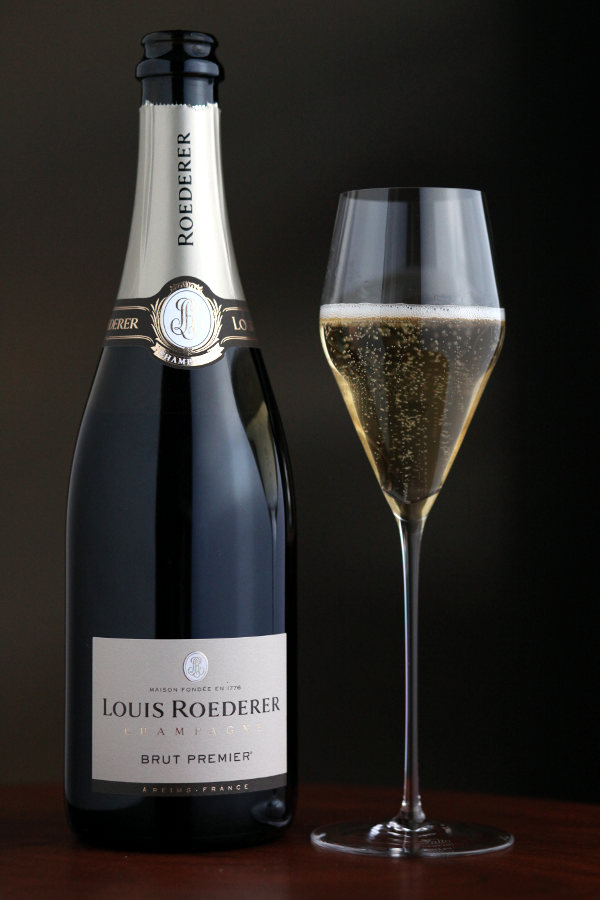 Brut Premier. Base 2015, bottled in 2016 and disgorged in 2018. There is a code on the neck foil that gets you these details on their website or you can download their app to scan it. Starts with an appetizing fresh scent and I say "yum" out loud. A pure spring water quality to the taste, a kind of clarity of flavor that makes you think of snowcaps and dripping icicles. Pleasantly bitter, quite dry, carrying associations with white currants and unripe apricots. The balance of sugars and acids is reminiscent of a ripe northern apple, like the frosty snap of the cult Antonovka. Pastry notes appear as it warms. It shows a pronounced character. There is a hint of the cellar, not as woodiness but like a refreshing coolness of a humidity-controlled museum room. There are also lactic associations like the high-solids greek yogurt. And a fragrant sort of toastiness. I've smelled this before: in springtime after rain, a citrus blossom afterglow in Jancis glass. Compare with notes for Hebrart. Delightful, especially for $40! Purchased at Marty's in autumn 2020. ⭐⭐⭐
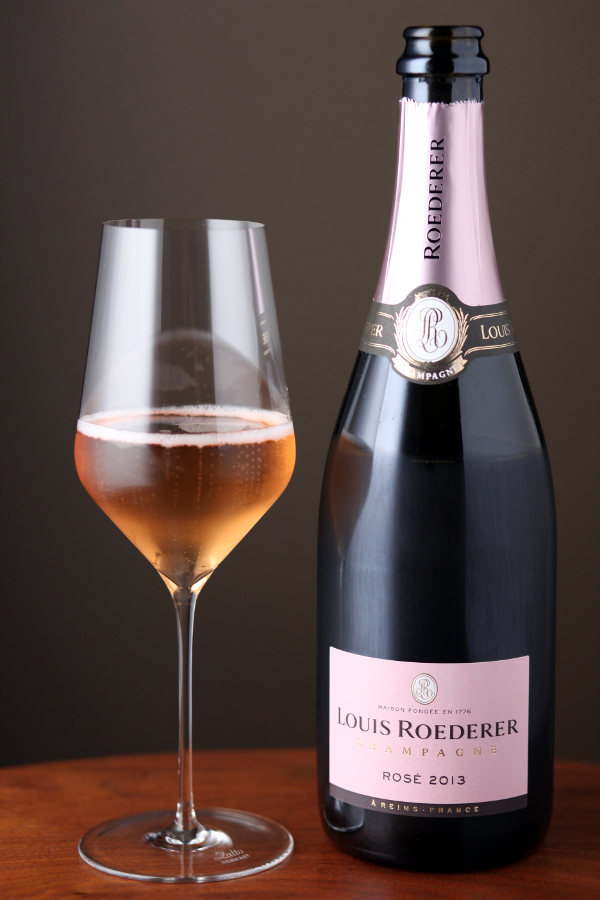 Rosé 2013. Bottled in 2014, disgorged in 2014. 65% pinot noir and 35% chardonnay. 20% matured in oak tuns. Unusual blending method - pre-fermentation, they call it "infusion" like a Japanese tee, see TyS for full description. Beautiful mousse and color (again, interesting commentary from TyS on the likely color variation year to year). Vocal apple note in the scent. Then pastry-family aromas with a curious albeit fleeting sweat nuance. Brief rose petals. Chalky with tannins and more chalk apparent in the scent as the wine warms up. Very dry, even crunchy despite 8g dosage. Opens up with time, carrying more pastry associations. Pleasant bitterness is there and also something else, intriguing, acidic and tropical, sandalwood comes to mind. Another taster detects strawberry and pronounces this champagne delicious. Purchased at Marty's in autumn 2020 for $75. ⭐⭐
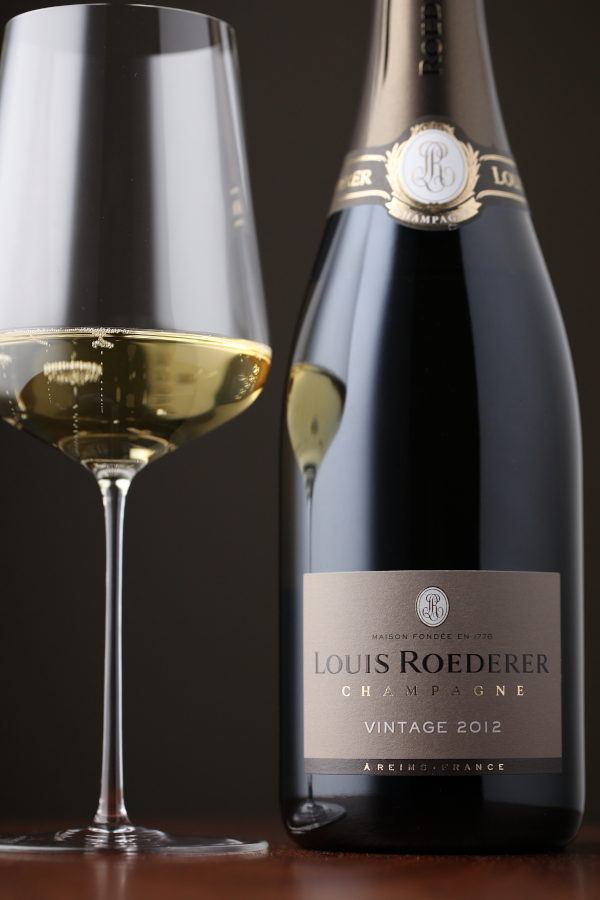 Vintage 2012. A little oaky. Tasty, bright, clean, balanced. The overall impression is pleasant but neutral. Purchased at Hazel's in autumn 2020 for $75. ⭐
All photos and tasting notes are by @gaiwanstyle
Producer profiles and wine details are from books by Peter Liem (PL), Tyson Stelzer (TyS), and Tom Stevenson (ToS)
Producer profiles and wine details are from books by Peter Liem (PL), Tyson Stelzer (TyS), and Tom Stevenson (ToS)